
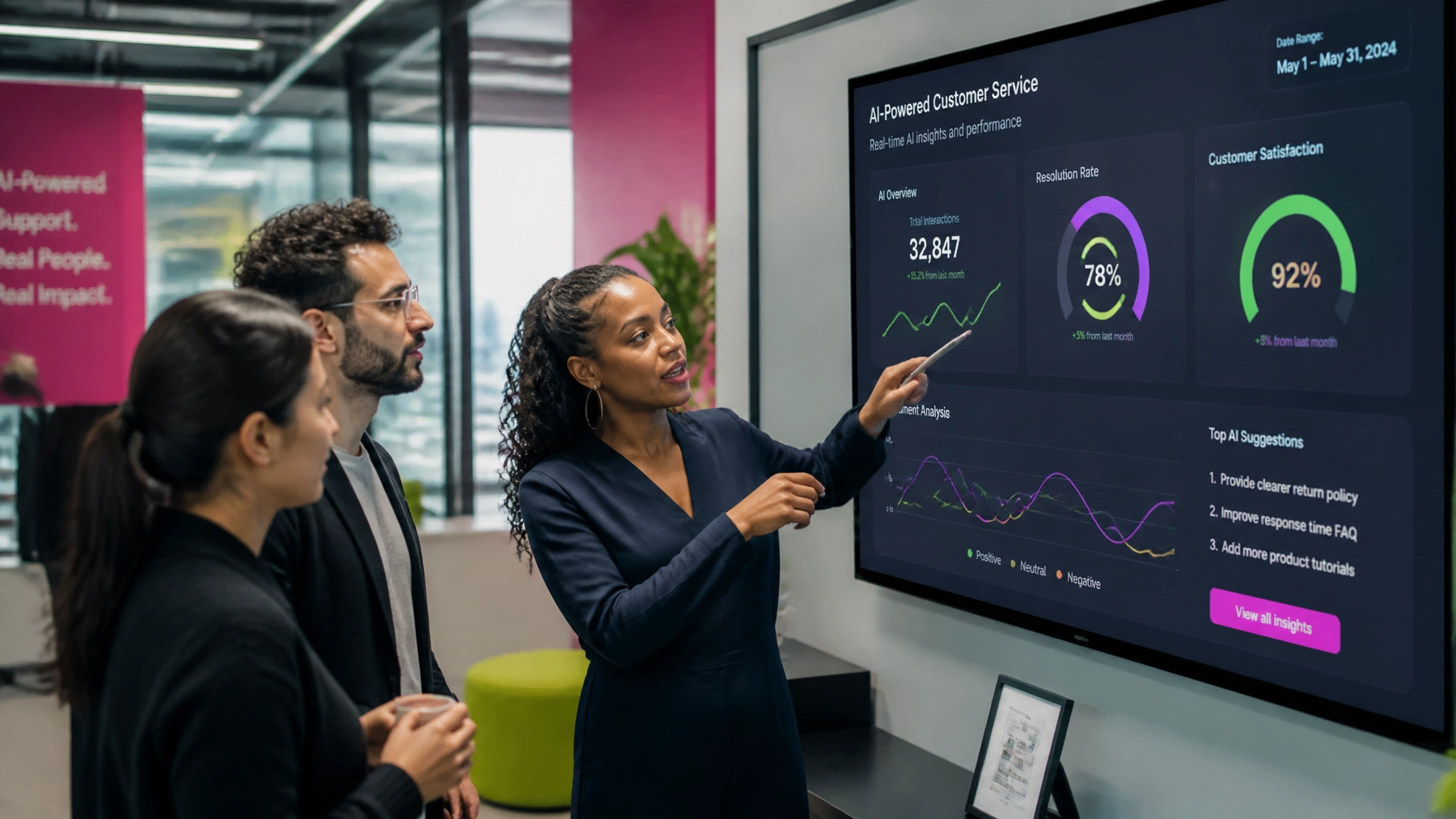
In the current digital landscape, the integration of artificial intelligence into 24/7 call centre services is no longer a strategic option; it is a fundamental necessity for business survival and growth. As we navigate 2026, the traditional model of purely human-operated customer support has become economically unsustainable and operationally insufficient to meet modern consumer expectations. Marketing has always been about meeting the customer where they are, but today, that means being available instantly, accurately, and at a scale that human labour alone cannot achieve.
For startups and established enterprises alike, the transition to a hybrid AI-human model represents the most significant shift in customer service history. This evolution is driven by the emergence of agentic AI: autonomous systems capable of managing multi-step workflows, which have transformed call centres from reactive cost centres into proactive, revenue-generating assets.
The Economic Mandate of 24/7 Operations
The financial arguments for AI integration are definitive. Industry data confirms that 88% of contact centres have already implemented AI in some capacity, signalling a universal shift in standard operating procedures. By the conclusion of 2026, it is projected that AI will drive over $80 billion in agent cost savings globally.
The disparity in operational costs is stark: a routine customer resolution handled by an AI agent costs between $1 and $3, whereas the same interaction handled by a human agent typically exceeds $13.50. For businesses operating 24/7 call center services, these margins determine the feasibility of international competition. Implementing automation allows organisations to reallocate capital from repetitive Tier 1 support toward high-value growth initiatives and complex problem-solving.
Understanding Agentic AI: The 2026 Breakthrough
The primary catalyst for this shift is the rise of "agentic" AI. Unlike the basic chatbots of the early 2020s, which were limited to simple FAQ responses, agentic AI systems are designed for autonomy. These agents can navigate internal software, verify customer identities, update CRM records, and complete complex transactions without human intervention.
Currently, agentic AI is capable of autonomously resolving 70% to 85% of routine calls. This level of containment ensures that your outsourced customer support remains highly efficient during off-peak hours, holidays, and sudden volume spikes. This is particularly vital for service industries where response time is directly correlated with customer retention.

The Hybrid Architecture: Tiered Support Systems
Effective integration requires a tiered approach that respects the strengths of both technology and human empathy. The hybrid model is built on the principle of strategic delegation:
Tier 1: AI-First Resolution
Agentic AI serves as the "front door" for all incoming enquiries. It handles high-frequency, low-complexity tasks such as the following:
- Order tracking and status updates.
- Basic troubleshooting and password resets.
- Booking and appointment scheduling.
- Data collection and preliminary verification.
By automating these routine tasks, businesses achieve 100% availability without the overhead of massive night-shift staffing.
Tier 2 & 3: Human-Led Expertise
When a query requires emotional intelligence, complex negotiation, or nuanced technical judgement, the system must provide a seamless escalation to a human agent. Humans handle:
- Conflict resolution and high-stakes complaints.
- Complex technical issues that fall outside standard parameters.
- Sensitive account negotiations and high-value sales.
This partnership ensures that human agents are not burnt out by repetitive tasks, allowing them to focus on work that adds the most value to the business. At B2B IT Solutions, our 24/7 support is structured to ensure that when a customer needs a human touch, they receive it instantly, backed by AI-driven insights that help the agent resolve the issue faster.

Sector Spotlight: Taxi Dispatch and TFL Compliance
The impact of AI integration is perhaps most visible in specialised sectors like transportation and logistics. For companies managing taxi dispatch services, AI handles the high-volume intake of booking requests and driver coordination. The AI agent can verify locations, estimate arrival times, and process payments across multiple languages simultaneously.
Furthermore, in the context of London’s regulatory environment, our specialised TFL document management system leverages AI to ensure compliance. Automated systems can track document expiration, verify licensing status, and alert operators to potential regulatory breaches in real-time. This level of precision is virtually impossible to maintain manually at scale, making AI integration a necessity for operational legality and efficiency.

A Step-by-Step Guide to AI Integration
Integrating AI into an existing 24/7 call centre infrastructure requires a systematic approach to avoid operational disruption.
Step 1: Data Audit and Workflow Mapping
Identify the most frequent "routine" enquiries that currently consume agent time. Analyse call logs to categorise queries by complexity. This data will form the training set for your AI agents.
Step 2: Implement Omnichannel AI
Modern customers communicate through varied platforms. Your AI should be integrated across voice, WhatsApp support, and live chat. A unified AI layer ensures that a customer can start a conversation on WhatsApp and continue it via a phone call without losing context.
Step 3: Establish Escalation Protocols
Define clear triggers for when an AI should transfer a call to a human. This usually involves sentiment analysis (detecting frustration) or the identification of keywords that indicate a high-priority issue.
Step 4: Pilot and Refine
Launch the AI in a "shadow" mode where it suggests responses to human agents before giving it full autonomy. Use the first 30 days to calibrate the AI’s decision-making logic against your business’s unique brand voice.
Step 5: Continuous Learning and Quality Assurance
AI systems are not "set and forget". In 2026, the most successful call centres employ a "human-in-the-loop" (HITL) strategy where human supervisors audit AI interactions to ensure quality, compliance, and accuracy.
Conclusion: The Strategic Urgency
The transition from traditional call centres to AI-enhanced hybrid operations is a defining moment for modern enterprise. The cost savings of $1-3 per resolution and the potential for 85% autonomous containment offer a competitive advantage that cannot be ignored. Businesses that delay this integration risk not only operational inefficiency but also a total loss of relevance in a market that demands instant, 24/7 precision.
Adopting these technologies is an exciting but also overwhelming prospect. However, the path forward is clear: automate the routine to liberate the human. By partnering with experts who understand both the technology and the industry-specific nuances of service delivery, you can transform your customer support into a robust engine for business growth.
The era of manual, 24/7 human-only support is ending. The era of the intelligent, high-efficiency hybrid centre is here.