
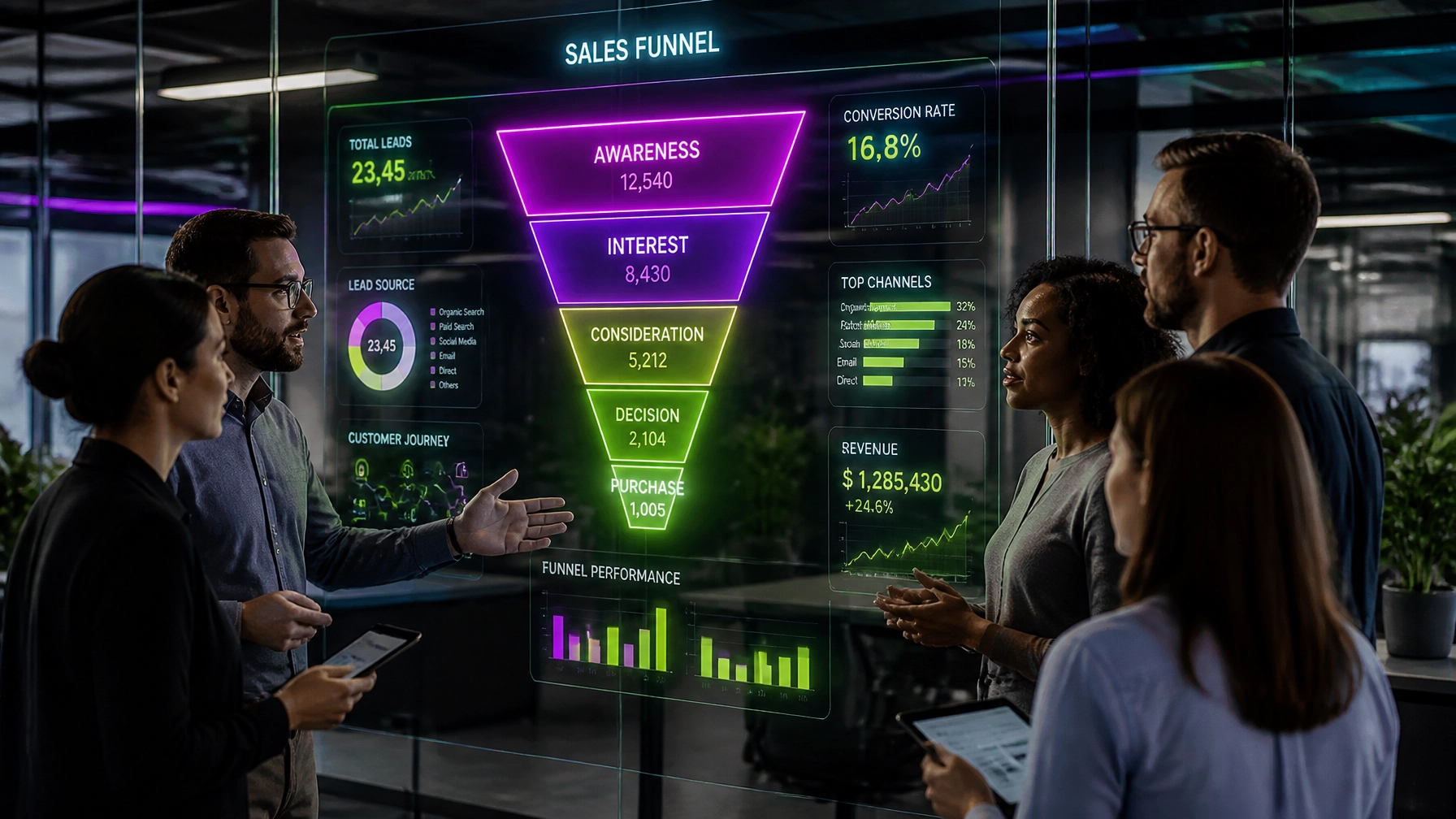
In the digital age, a disjointed marketing strategy is no longer a sustainable business model; it is a liability that invites obsolescence. As we navigate the complexities of 2026, the transition from traditional, siloed tactics to an integrated, AI-orchestrated growth funnel has become a strategic necessity. For startup founders and established enterprises alike, the challenge is no longer just about acquiring traffic but about architecting a seamless journey that transforms a solitary "click" into a lifelong brand advocate.
Marketing has always been about connection, but the tools of engagement have evolved into a high-stakes ecosystem where data, speed, and personalisation are the primary currencies. To survive in this hyper-competitive landscape, businesses must stop viewing their marketing, customer support, and product development as separate entities. Instead, these components must function as a singular, unified engine. This guide outlines the blueprint for a 2026 growth funnel: a full-funnel strategy designed to capture attention, convert intent through intelligent support, and retain loyalty through high-value digital products.
Phase 1: Precision Acquisition: Winning the Top of the Funnel
The top of the funnel (TOFU) is where the battle for attention is won or lost. In 2026, the volume of digital noise is unprecedented, making traditional "spray and pray" advertising methods entirely ineffective. Success at this stage requires a surgical approach to paid media, specifically through high-performance platforms like Google Ads.
Acquisition is no longer just about high search volume; it is about intent-based targeting. When a potential customer enters a query, they are signalling a specific pain point. Your role as a strategic advisor to your own brand is to ensure that your solution is presented with absolute relevance. However, many businesses squander their budgets on broad keywords and poorly optimised landing pages, leading to high bounce rates and diminished ROI.
To avoid these pitfalls, precision in campaign management is mandatory. Small errors in bidding strategies or negative keyword selection can lead to significant financial leakage. For a deeper dive into optimising your acquisition strategy, read our comprehensive guide on 7 Mistakes You're Making with Google Ads Management (and How to Fix Them). Mastering these nuances allows you to lower your Customer Acquisition Cost (CAC) while increasing the quality of the leads entering your ecosystem. In the 2026 landscape, a well-oiled Google Ads engine serves as the vital entry point that feeds the rest of your growth funnel.
Phase 2: The Conversion Bridge: AI-Enhanced Support and Engagement
Once a lead has clicked your ad, they enter the middle of the funnel (MOFU). This is the most critical juncture of the customer journey, often referred to as the "Conversion Bridge". In this phase, the goal shifts from discovery to validation. The potential customer is evaluating your credibility, responsiveness, and ability to solve their problem in real-time.
Modern consumers expect immediate gratification. A delay of even a few minutes in responding to an inquiry can result in the loss of a lead to a competitor. This makes 24/7 availability a non-negotiable requirement for business growth. However, human-only support is difficult to scale, and pure-bot support often feels cold and unhelpful, leading to "customer frustration churn".
The solution for 2026 is a hybrid approach: the integration of advanced AI with professional human oversight. This "human-in-the-loop" model ensures that routine enquiries are handled instantly by intelligent systems, while complex, high-value interactions are seamlessly escalated to expert agents.
At B2B IT Solutions, we emphasise that conversion is a result of trust. By providing round-the-clock inbound call centre support backed by AI, you demonstrate a level of reliability that differentiates your brand. Understanding how to balance these technologies is essential for maintaining a high conversion rate. We recommend exploring our strategic roadmap on How to Integrate AI With Your 24/7 Call Center Services (The 2026 Hybrid Guide) to learn how to build a support infrastructure that converts curiosity into commitment.
Furthermore, an omnichannel presence is necessary. Whether a customer reaches out via a phone call, live chat, or messaging apps, the experience must be consistent. Integrating platforms like WhatsApp into your support workflow allows for a more personal, direct line of communication that feels natural to the modern user.
Phase 3: Retention and Ecosystem Loyalty: The Bottom of the Funnel
The traditional funnel often ends at the point of sale, but for a growth-orientated business in 2026, the sale is merely the beginning. The bottom of the funnel (BOFU) is dedicated to retention, upsells, and maximising customer lifetime value (LTV). The most effective way to secure this loyalty is by embedding your brand into the customer's daily life through proprietary technology.
Custom mobile applications have moved from being a "nice-to-have" luxury to a central pillar of customer retention. An app is not just a tool; it is a dedicated channel where you own the data, the notification space, and the user experience without the interference of third-party platform algorithms. By providing a high-utility, user-friendly mobile experience, you transform a one-time buyer into a recurring user.

For startups looking to scale, the right app idea can serve as the ultimate "sticky" factor. Whether it is a specialised dashboard for logistics, a personalised shopping assistant, or a document management portal, your digital product should solve a recurring problem for your user. If you are seeking inspiration for your next product pivot, consult our list of the Top 10 Mobile App Development Ideas for Your Business in 2026.
In this phase, the data gathered from your AI-enhanced support and your Google Ads campaigns should inform the features of your app. This creates a feedback loop: your ads attract users, your support converts them, and your app keeps them. This interconnectedness is what defines a successful digital ecosystem.
Conclusion: The Total Business Ecosystem
Building a 2026 growth funnel is an exercise in strategic synchronisation. It requires moving beyond the "campaign" mindset and adopting an "ecosystem" perspective. When your acquisition efforts are precise, your support is intelligent and omnipresent, and your digital products are indispensable, growth becomes an inevitable byproduct of your infrastructure.
The digital landscape is exciting but also overwhelming for those without a clear roadmap. However, by focusing on these three core pillars – Google Ads for acquisition, AI-hybrid support for conversion, and custom mobile solutions for retention – you position your business to not only compete but to lead.
The transition to this modern model is no longer optional; it is the prerequisite for survival in the next era of digital commerce. At B2B IT Solutions, we are committed to providing the technical expertise and strategic guidance necessary to help you build this ecosystem. The time to optimise your funnel for 2026 is today.