
Is Call Center Outsourcing Right for Your Business?

Maintaining a competitive edge in the modern marketplace requires more than just a superior product or service; it demands an unwavering commitment to customer accessibility. In the digital age, the traditional 9-to-5 operational model has become a relic of the past. As businesses scale, the transition from in-house support to professional call centre outsourcing is no longer merely a strategic suggestion: it is a functional necessity for survival and growth.

For many entrepreneurs, the prospect of handing over customer communications to an external partner is exciting but also overwhelming. However, the data is clear: businesses that fail to provide immediate, professional, and reliable support risk immediate obsolescence in a world where consumer patience is at an all-time low. This guide examines why call centre outsourcing is the definitive solution for organisations aiming to professionalise their operations and capture market share.

The Mandate for 24/7 Availability

In a globalised economy, your customers do not sleep according to your time zone. Implementing 24/7 support is a critical requirement for any business that aspires to reach a national or international audience. When a potential lead reaches out at 2:00 AM, the difference between a secured contract and a lost opportunity is a live professional voice on the other end of the line.

At B2B IT Solutions, we recognise that reliability is the foundation of trust. By outsourcing your inbound call management, you ensure that every inquiry, whether via phone, live chat, or email, is handled with the same level of care and urgency as if you were answering it yourself. This constant presence not only improves customer satisfaction scores but also solidifies your brand’s reputation as a reliable industry leader.

Strategic Cost Efficiency and Scalability

Financial agility is the lifeblood of startups and growing enterprises. Traditional hiring processes, involving recruitment, training, benefits, and infrastructure, represent a massive capital expenditure that can stifle innovation. Call centre outsourcing transforms these heavy fixed costs into manageable variable expenses.

By leveraging an external partner, businesses can scale their support operations up or down in real-time. Whether you are experiencing a seasonal surge or launching a new marketing campaign, an outsourced team provides the elasticity needed to handle fluctuating volumes without the administrative burden of hiring temporary staff. This efficiency allows founders and executives to redirect their focus toward core business drivers, such as product development and strategic digital marketing.

Professionalism and Data Privacy: Non-Negotiable Standards

Professionalism in communication is a direct reflection of your business's values. An amateurish response or a missed call can cause irreparable damage to a company's image. Strategic outsourcing provides access to a pool of highly trained experts who specialise in conflict resolution, technical support, and professional etiquette.

Furthermore, in an era defined by data breaches and regulatory scrutiny, privacy is paramount. At B2B IT Solutions, our call centre services are built upon a foundation of strict confidentiality and secure data-handling protocols. We understand that your customers' information is a sacred trust, and we maintain the highest standards of privacy to protect your business from legal and reputational risks.

Secure omnichannel support including WhatsApp messaging

Specialized Solutions for Niche Industries

While general customer support is vital, certain industries require specialised technical knowledge. For instance, the transportation and logistics sector demands precision and rapid response times. Our dedicated taxi dispatch service and TFL document management system are prime examples of how outsourcing can provide industry-specific expertise that would be difficult to cultivate in-house.

By partnering with a provider that understands the nuances of your specific market, you gain more than just a call taker; you gain a strategic advisor who understands the operational challenges of your industry. This specialised focus ensures that your customers receive accurate information and efficient service, regardless of the complexity of their needs.

Enhancing the Omnichannel Experience

The modern consumer journey is rarely linear. A customer may start a conversation on your website via WhatsApp support, follow up via email, and eventually call to finalise a purchase. Managing this omnichannel experience internally is a logistical nightmare for most small-to-medium enterprises.

Managing customer inquiries across multiple digital platforms

Outsourcing allows for a unified communication strategy. Professional call centres utilise integrated CRM systems to ensure that the agent has a full history of the customer’s interactions across all platforms. This seamless continuity reduces customer frustration and significantly increases the likelihood of a successful conversion.

Conclusion: The Strategic Path Forward

Is call centre outsourcing right for your business? If your goal is to reduce operational overhead, ensure 24/7 reliability, and provide a professional brand experience that drives growth, then the answer is a resounding yes. The transition from traditional, localised support to a modern, outsourced model is a vital step in any company's evolution.

At B2B IT Solutions, we are dedicated to helping businesses of all sizes achieve their full potential through high-quality B2B IT solutions and comprehensive support services. By entrusting your customer enquiries to our professional team, you are not just outsourcing a task: you are investing in the long-term success and scalability of your brand.

For more information on how our 24/7 call centre can transform your operations, contact us today to discuss a tailored solution for your business.
10 Reasons Your Local SEO Isn’t Working in 2026 (And How to Fix It)

Local visibility is no longer a luxury; it is a fundamental pillar of business survival in the 2026 digital landscape. Marketing has always been about meeting the customer where they are, but today, "where they are" has shifted from a simple list of search results to a complex ecosystem of AI assistants, voice-activated devices, and hyper-local map interfaces. For small businesses, the transition from traditional search tactics to modern, AI-integrated local SEO is a necessary evolution rather than a suggestion.

The digital age has ushered in a period of intense competition where being "near" a customer is insufficient if your digital footprint is invisible to the algorithms that guide them. If your traffic has plateaued or your local lead generation is stalling, it is likely because your strategy is anchored in 2022 tactics while the world has moved on to 2026 realities. Understanding why your current local SEO is failing is the first step toward reclaiming your market share.

Here are the ten primary reasons your local SEO is underperforming in 2026 and the strategic mandates required to fix them.

1. You Are Optimizing for Search Engines Instead of Answer Engines

The era of "10 blue links" is effectively over. In 2026, Answer Engine Optimisation (AEO) is a necessity. AI tools like ChatGPT, Gemini, and Perplexity now handle a significant portion of local enquiries, synthesising data from across the web to provide a single, definitive recommendation. If your website is not structured to be "read" and "trusted" by these large language models (LLMs), you will simply not be cited in their answers.

The Fix: Transition your content strategy from keyword stuffing to intent-based answers. Use comprehensive digital marketing strategies that prioritise structured data and natural language. Your content should answer specific local questions such as "Which IT firm in London provides 24/7 on-site support?" Rather than just targeting the phrase "London IT support".

2. Neglecting the Conversational Nature of Voice Search

Voice search is no longer a secondary feature; it is a dominant search modality for mobile and in-car users. In 2026, queries are longer, more conversational, and phrased as complete questions. If your local SEO strategy relies on fragmented keywords, you are missing the massive volume of traffic coming from Siri, Alexa, and Google Assistant.

The Fix: Implement a robust FAQ section on your website that mirrors the natural phrasing of your customers. Phrases like "best affordable web design near me" should be integrated into conversational paragraphs that explain your value proposition clearly and succinctly.

3. Your Google Business Profile (GBP) is Static and Incomplete

Your Google Business Profile is the digital shopfront of your business. In 2026, GBP accounts for approximately 36% of local pack ranking factors. A profile that lacks frequent updates, high-quality photos, or detailed service descriptions signals to AI algorithms that your business may no longer be active or reliable.

The Fix: Treat your GBP like a social media marketing platform. Post weekly updates, respond to every question in the Q&A section, and ensure your service list is exhaustive. Accurate and frequent updates are mandatory for maintaining "prominence" in the local pack.

4. Failing to Build an "Ecosystem of Trust" Through Reviews

The digital reputation of a business is now its most valuable currency. In 2026, reviews are not just for customers; they are "distributed validation" signals that AI systems use to weigh the reliability of a recommendation. If your review volume is low or your responses are generic templates, your "Trust" score will plummet.

The Fix: Establish a systematic process for generating and responding to reviews. Personalised responses that mention specific services help build the E-E-A-T (Experience, Expertise, Authoritativeness, and Trust) that search engines demand. At B2B IT Solutions, we emphasise that results-driven strategies must always be backed by visible, authentic client feedback.

5. Inconsistent NAP Data Across the Distributed Web

Consistency remains a cornerstone of local SEO. If your Name, Address, and Phone number (NAP) vary across different directories, Yelp, or industry-specific listings, AI search tools will view your business as high-risk. These systems query 8-12 different sources before making a recommendation; a lack of consensus leads to exclusion.

The Fix: Audit your digital footprint. Ensure that every mention of your business, from major directories to niche local listings, is identical. This coherence reinforces your authority and makes it easier for AI assistants to verify your location and legitimacy.

6. Overlooking Hyper-Local and Implicit Intent

In 2026, search engines are sophisticated enough to understand location without the user specifying a city. "Implicit intent" means a user searching for "emergency plumbing" expects results within a 5-mile radius. If your content doesn't explicitly mention the specific neighbourhoods or landmarks you serve, you will lose out to competitors who have mapped their local service area more granularly.

The Fix: Create hyper-local landing pages. Instead of a single "Services" page, develop content that discusses the specific challenges and projects you've handled in different parts of your city. This geographic relevance is crucial for appearing in "near me" results.

7. Disregarding E-E-A-T in Your Content Strategy

Search engines have evolved to prioritise content created by humans with real-world experience. If your local landing pages are thin, generic, or clearly AI-generated without human oversight, they will fail the E-E-A-T test. Establishing your expertise is no longer optional; it is a requirement for competitive rankings.

The Fix: Highlight your team’s credentials, case studies, and years in the industry. For instance, our custom web and mobile app development team showcases real-world solutions and technical depth to prove expertise. Authentic storytelling that demonstrates you’ve solved local problems for local people is irreplaceable.

8. Mobile-Last Design and Fragmented User Experience

With over 70% of local searches originating on mobile devices, a "mobile-friendly" site is no longer sufficient; it must be "mobile-first". Slow load times, difficult-to-click buttons, or intrusive pop-ups lead to high bounce rates, which search engines interpret as a sign of a poor-quality business.

The Fix: Prioritise speed and utility. Ensure your "Click-to-Call" buttons are prominent and your site loads in under two seconds. A seamless mobile experience is a direct signal of professional reliability.

9. Over-Reliance on Traditional Backlinks

While backlinks still matter, their weight in local SEO has decreased to approximately 15% in 2026. If you are spending your entire budget on guest posts while ignoring your local reputation and GBP, your ROI will continue to dwindle.

The Fix: Shift your focus toward "local mentions". Getting mentioned by a local news outlet, a neighbourhood blog, or a community organisation carries more weight for local SEO than a high-authority link from a non-relevant international site.

10. Failing to Adapt to Generative AI Overviews (SGE)

Google's AI Overviews now dominate the top of the search results page. These summaries often provide all the information a user needs: phone number, hours, and a summary of reviews without the user ever clicking through to a website. This "zero-click" reality means your visibility depends on being the source of the data Google uses for these summaries.

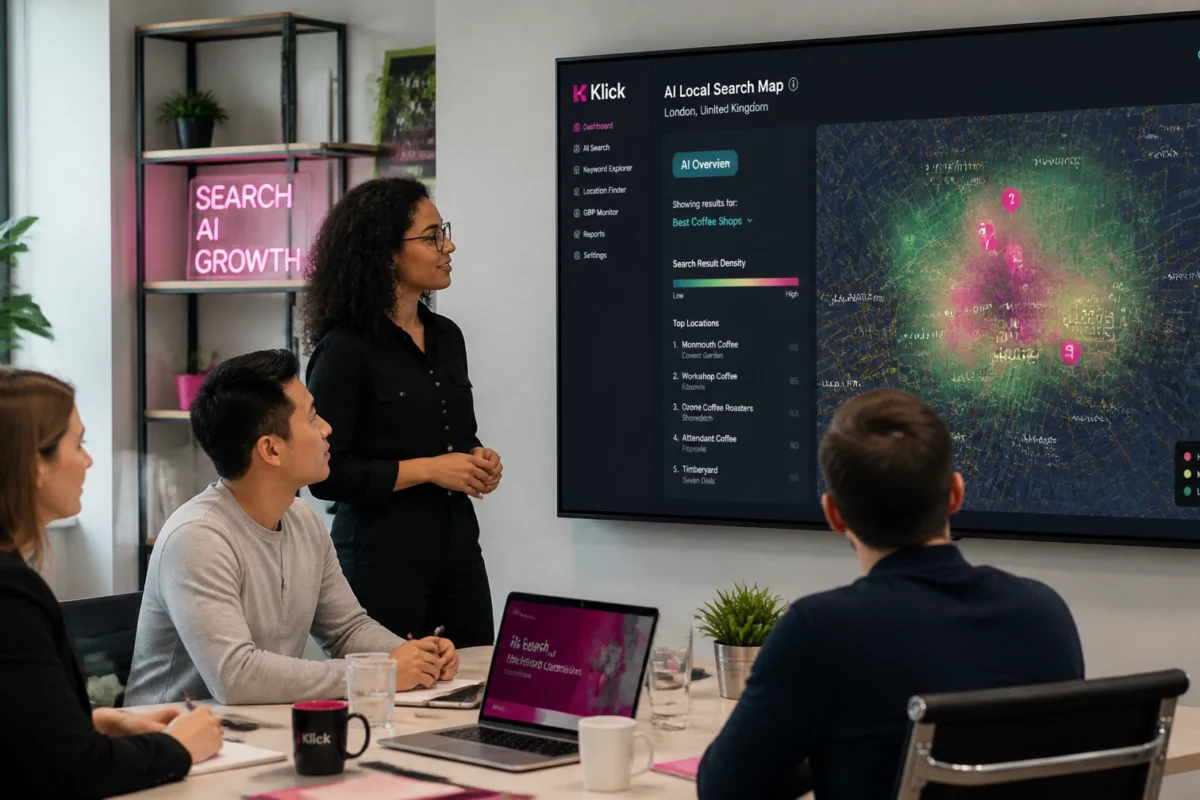
A professional at a laptop reviewing local SEO analytics with modern charts, reflecting the need for data-driven adaptation in the age of AI.

The Fix: Use schema markup (LocalBusiness, FAQ, and Review schemas) to make your data digestible for AI. By clearly labelling your data, you increase the chances that your business will be the "featured" recommendation in an AI Overview.

Conclusion: The Strategic Path Forward

The digital landscape of 2026 demands a shift from reactive tactics to a proactive, integrated local SEO strategy. Small businesses must view their digital presence not as a static brochure, but as a living, breathing ecosystem that feeds data to the AI systems guiding modern consumers.

The transition is exciting but also overwhelming. At B2B IT Solutions, we provide the results-driven digital services necessary to navigate this complexity. Whether you need an SEO overhaul, a custom mobile app, or 24/7 customer support to handle the leads your SEO generates, we are your strategic partner in growth.

Don't let your business become a ghost in the machine. Contact B2B IT Solutions today to modernise your local SEO and dominate your market.

Custom Web vs. Mobile App Development: Which Is Better For Your Business Growth?

In the current digital age, the decision between custom web development and mobile app development is no longer a matter of preference; it is a critical strategic mandate that determines the trajectory of a company's growth. For businesses operating in 2026, establishing a robust digital presence is an absolute necessity for survival and scaling. As market competition intensifies, the choice of platform serves as the foundation upon which customer acquisition, user engagement, and operational efficiency are built.

Selecting the appropriate technology stack requires a professional and calculated assessment of your business objectives, target audience behavior, and long-term scalability requirements. At B2B IT Solutions, we recognize that this decision is often exciting but also overwhelming for stakeholders. This guide serves as a strategic roadmap to help you navigate these complex technological waters and determine which investment will yield the highest return for your specific enterprise.

The Digital Landscape of 2026: Convergence and Competition

The traditional boundaries between "websites" and "apps" have fundamentally shifted. In 2026, custom web development has evolved far beyond static pages, incorporating Progressive Web Apps (PWAs) and AI-native architectures that deliver near-native performance directly through the browser. Simultaneously, mobile apps have become deeper, more integrated ecosystems that leverage 5G, on-device machine learning, and IoT connectivity.

For a modern enterprise, "digital transformation" is an essential evolution from traditional methods to creative, technology-driven tactics. Whether you are a startup looking to disrupt the market or a large enterprise optimizing internal workflows, the platform you choose must align with how your customers interact with your brand in their daily lives.

Custom Web Development: The Gateway to Scalable Reach

Custom web development remains the gold standard for businesses requiring maximum reach with minimal friction. A high-quality web platform is the primary touchpoint for search-driven acquisition and serves as the central hub for your digital ecosystem.

A professional developer working on complex code in a modern office, representing a commitment to custom software solutions.

Why Web Development is Necessary for Growth

Web-based solutions offer an unparalleled advantage in terms of discoverability and accessibility. Because web applications are indexed by search engines, they are essential for businesses that rely on SEO and content marketing to drive traffic.

  1. Lower Barrier to Entry: Users can access your services instantly via a URL without the friction of an app store download. In a world of shortening attention spans, this immediate access is a significant competitive advantage.
  2. Cost-Effective Iteration: Developing a custom web application typically allows for faster deployment and easier updates. At B2B IT Solutions, our development services focus on building scalable web architectures that can evolve alongside your business without the bureaucratic delays of app store review processes.
  3. Universal Compatibility: A single web application can serve users across desktops, tablets, and smartphones, ensuring a consistent brand experience regardless of the hardware.

For B2B SaaS providers, internal management tools, and content-heavy platforms, custom web development is the most strategic starting point for global expansion.

Mobile App Development: The Engine of Retention and Engagement

While web development excels at acquisition, mobile app development is the undisputed leader in user retention and deep engagement. For businesses that require frequent interaction or access to specific hardware features, a native or cross-platform mobile app is no longer optional.

A user interacting with a mobile device, highlighting the responsive and engaging nature of modern mobile applications.

When Mobile-First is a Strategic Mandate

If your value proposition depends on being "always with the user," a mobile app is the logical choice. This is particularly true for industries where mobility is central to the service provided.

  • Deep Device Integration: Mobile apps offer full access to the device’s camera, GPS, Bluetooth, and biometric authentication. This is critical for sectors like logistics and transportation. For example, our taxi dispatch services rely on high-performance mobile interfaces to manage real-time tracking and driver-passenger communications.
  • High-Frequency Interaction: Apps live on the user’s home screen, fostering habitual usage. Through sophisticated push notifications and personalized on-device experiences, businesses can maintain a constant line of communication with their audience.
  • Offline Functionality: Mobile apps are superior for workflows that require robust performance in areas with intermittent connectivity, allowing users to continue tasks without a constant data stream.

Direct Comparison: Web vs. Mobile for Business Strategy

To make an informed decision, one must compare these platforms across key business metrics:

Metric Custom Web / PWA Mobile App (Native/Cross)
Primary Goal Acquisition & Reach Retention & Loyalty
Discovery Search Engines (SEO) App Stores (ASO)
User Friction Low (No install required) High (Download & Install)
Hardware Access Limited Full (GPS, Camera, Sensors)
Development Speed Fast Moderate to Slow
Maintenance Single Codebase Multiple Platforms (iOS/Android)

A conceptual blueprint showing the strategic paths of technology development and business growth.

The Staged Growth Strategy: A Hybrid Approach

For many enterprises, the question is not "which" but "when." A strategic advisor would often recommend a staged rollout that capitalizes on the strengths of both platforms as the business matures.

  1. Phase 1: Web-First for Validation: Launch a custom web application to validate your product-market fit, drive initial traffic through digital marketing, and gather user data with lower initial investment.
  2. Phase 2: Mobile Expansion for Retention: Once a loyal user base is established, develop a mobile app to deepen engagement for your most active users. This phased approach manages capital risk while ensuring the business remains responsive to market feedback.

This hybrid model is particularly effective for businesses that value reliability and results-driven strategies. By starting with a robust web presence, you ensure that your customer support and inbound call center teams are supported by a centralized, accessible platform from day one.

Why Quality and Professionalism Matter

Regardless of the platform, the quality of the execution is paramount. In a crowded digital marketplace, a poorly designed web interface or a buggy mobile app can cause irreparable damage to a brand's reputation. At B2B IT Solutions, our strengths lie in providing user-friendly, scalable tech that prioritizes security and reliability.

We focus on the "why" of business evolution, ensuring that every line of code serves a utilitarian purpose: to grow your business. Our creative design services ensure that your digital products are not only functional but also aligned with modern aesthetic standards that build trust with your audience.

A business professional interacting with a digital marketing dashboard, symbolizing a results-driven approach to digital growth.

Conclusion: Securing Your Digital Future

The transition from traditional business models to digital-first operations is an essential necessity for any business aiming for longevity. Whether you choose custom web development for its immense reach or a mobile app for its deep engagement, the decision must be grounded in strategic data and professional foresight.

Ignoring the shift toward sophisticated digital platforms is no longer a viable option. The digital competition is fierce, and the window for establishing market dominance is narrow.

Are you ready to accelerate your business growth with a custom-built solution? Contact B2B IT Solutions today to consult with our experts. Whether you need a high-performance web application, a custom mobile app, or a comprehensive digital marketing strategy, we provide the technical expertise and 24/7 support necessary to ensure your success.


Custom Web vs. Mobile App Development: Which Is Better For Your Business Growth?

In the current digital age, the decision between custom web development and mobile app development is no longer a matter of preference; it is a critical strategic mandate that determines the trajectory of a company's growth. For businesses operating in 2026, establishing a robust digital presence is an absolute necessity for survival and scaling. As market competition intensifies, the choice of platform serves as the foundation upon which customer acquisition, user engagement, and operational efficiency are built.

Selecting the appropriate technology stack requires a professional and calculated assessment of your business objectives, target audience behavior, and long-term scalability requirements. At B2B IT Solutions, we recognize that this decision is often exciting but also overwhelming for stakeholders. This guide serves as a strategic roadmap to help you navigate these complex technological waters and determine which investment will yield the highest return for your specific enterprise.

The Digital Landscape of 2026: Convergence and Competition

The traditional boundaries between "websites" and "apps" have fundamentally shifted. In 2026, custom web development has evolved far beyond static pages, incorporating Progressive Web Apps (PWAs) and AI-native architectures that deliver near-native performance directly through the browser. Simultaneously, mobile apps have become deeper, more integrated ecosystems that leverage 5G, on-device machine learning, and IoT connectivity.

For a modern enterprise, "digital transformation" is an essential evolution from traditional methods to creative, technology-driven tactics. Whether you are a startup looking to disrupt the market or a large enterprise optimizing internal workflows, the platform you choose must align with how your customers interact with your brand in their daily lives.

Custom Web Development: The Gateway to Scalable Reach

Custom web development remains the gold standard for businesses requiring maximum reach with minimal friction. A high-quality web platform is the primary touchpoint for search-driven acquisition and serves as the central hub for your digital ecosystem.

A professional developer working on complex code in a modern office, representing a commitment to custom software solutions.

Why Web Development is Necessary for Growth

Web-based solutions offer an unparalleled advantage in terms of discoverability and accessibility. Because web applications are indexed by search engines, they are essential for businesses that rely on SEO and content marketing to drive traffic.

  1. Lower Barrier to Entry: Users can access your services instantly via a URL without the friction of an app store download. In a world of shortening attention spans, this immediate access is a significant competitive advantage.
  2. Cost-Effective Iteration: Developing a custom web application typically allows for faster deployment and easier updates. At B2B IT Solutions, our development services focus on building scalable web architectures that can evolve alongside your business without the bureaucratic delays of app store review processes.
  3. Universal Compatibility: A single web application can serve users across desktops, tablets, and smartphones, ensuring a consistent brand experience regardless of the hardware.

For B2B SaaS providers, internal management tools, and content-heavy platforms, custom web development is the most strategic starting point for global expansion.

Mobile App Development: The Engine of Retention and Engagement

While web development excels at acquisition, mobile app development is the undisputed leader in user retention and deep engagement. For businesses that require frequent interaction or access to specific hardware features, a native or cross-platform mobile app is no longer optional.

A user interacting with a mobile device, highlighting the responsive and engaging nature of modern mobile applications.

When Mobile-First is a Strategic Mandate

If your value proposition depends on being "always with the user," a mobile app is the logical choice. This is particularly true for industries where mobility is central to the service provided.

  • Deep Device Integration: Mobile apps offer full access to the device’s camera, GPS, Bluetooth, and biometric authentication. This is critical for sectors like logistics and transportation. For example, our taxi dispatch services rely on high-performance mobile interfaces to manage real-time tracking and driver-passenger communications.
  • High-Frequency Interaction: Apps live on the user’s home screen, fostering habitual usage. Through sophisticated push notifications and personalized on-device experiences, businesses can maintain a constant line of communication with their audience.
  • Offline Functionality: Mobile apps are superior for workflows that require robust performance in areas with intermittent connectivity, allowing users to continue tasks without a constant data stream.

Direct Comparison: Web vs. Mobile for Business Strategy

To make an informed decision, one must compare these platforms across key business metrics:

Metric Custom Web / PWA Mobile App (Native/Cross)
Primary Goal Acquisition & Reach Retention & Loyalty
Discovery Search Engines (SEO) App Stores (ASO)
User Friction Low (No install required) High (Download & Install)
Hardware Access Limited Full (GPS, Camera, Sensors)
Development Speed Fast Moderate to Slow
Maintenance Single Codebase Multiple Platforms (iOS/Android)

A conceptual blueprint showing the strategic paths of technology development and business growth.

The Staged Growth Strategy: A Hybrid Approach

For many enterprises, the question is not "which" but "when." A strategic advisor would often recommend a staged rollout that capitalizes on the strengths of both platforms as the business matures.

  1. Phase 1: Web-First for Validation: Launch a custom web application to validate your product-market fit, drive initial traffic through digital marketing, and gather user data with lower initial investment.
  2. Phase 2: Mobile Expansion for Retention: Once a loyal user base is established, develop a mobile app to deepen engagement for your most active users. This phased approach manages capital risk while ensuring the business remains responsive to market feedback.

This hybrid model is particularly effective for businesses that value reliability and results-driven strategies. By starting with a robust web presence, you ensure that your customer support and inbound call center teams are supported by a centralized, accessible platform from day one.

Why Quality and Professionalism Matter

Regardless of the platform, the quality of the execution is paramount. In a crowded digital marketplace, a poorly designed web interface or a buggy mobile app can cause irreparable damage to a brand's reputation. At B2B IT Solutions, our strengths lie in providing user-friendly, scalable tech that prioritizes security and reliability.

We focus on the "why" of business evolution, ensuring that every line of code serves a utilitarian purpose: to grow your business. Our creative design services ensure that your digital products are not only functional but also aligned with modern aesthetic standards that build trust with your audience.

A business professional interacting with a digital marketing dashboard, symbolizing a results-driven approach to digital growth.

Conclusion: Securing Your Digital Future

The transition from traditional business models to digital-first operations is an essential necessity for any business aiming for longevity. Whether you choose custom web development for its immense reach or a mobile app for its deep engagement, the decision must be grounded in strategic data and professional foresight.

Ignoring the shift toward sophisticated digital platforms is no longer a viable option. The digital competition is fierce, and the window for establishing market dominance is narrow.

Are you ready to accelerate your business growth with a custom-built solution? Contact B2B IT Solutions today to consult with our experts. Whether you need a high-performance web application, a custom mobile app, or a comprehensive digital marketing strategy, we provide the technical expertise and 24/7 support necessary to ensure your success.