
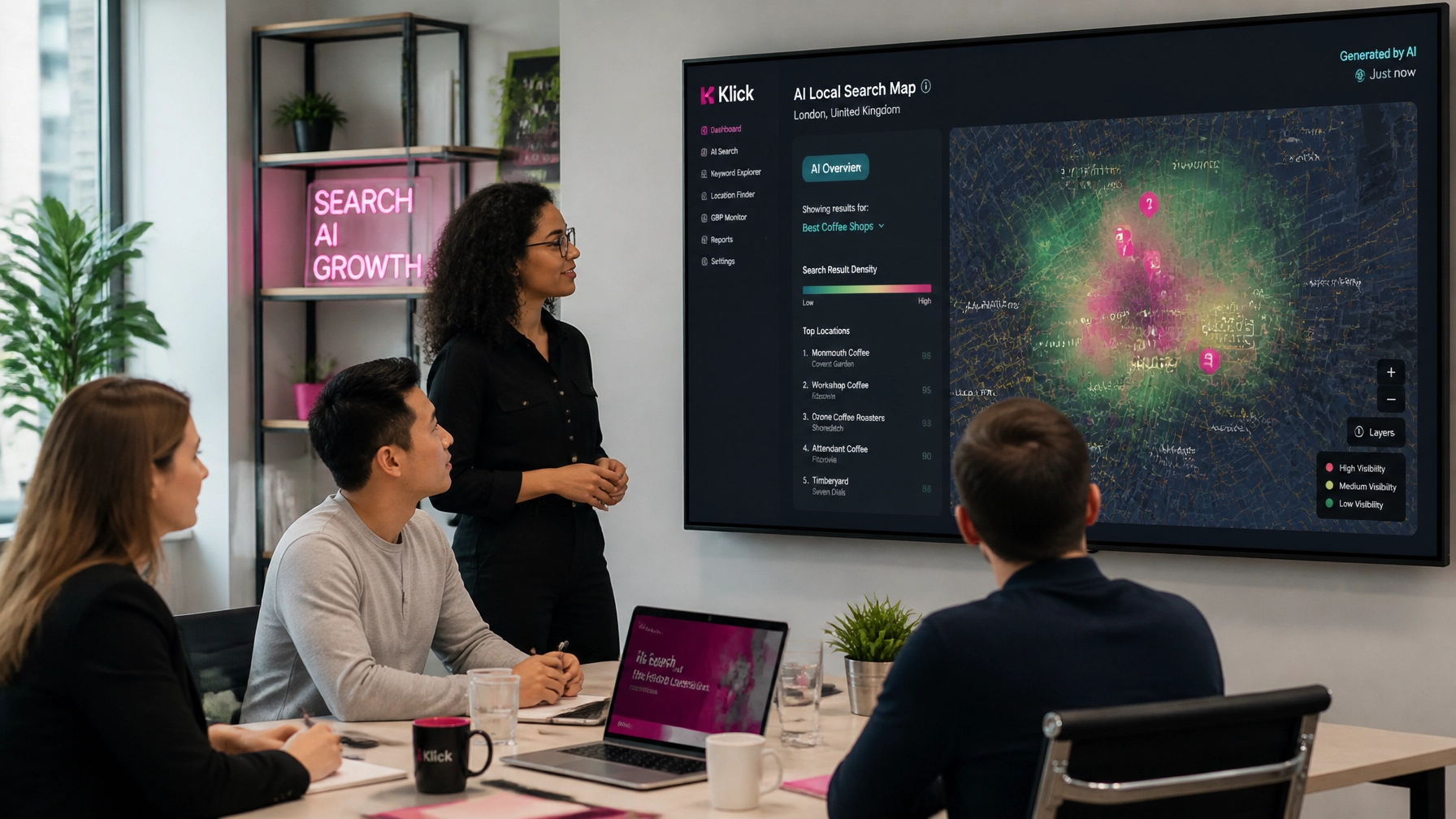
Local visibility is no longer a luxury; it is a fundamental pillar of business survival in the 2026 digital landscape. Marketing has always been about meeting the customer where they are, but today, "where they are" has shifted from a simple list of search results to a complex ecosystem of AI assistants, voice-activated devices, and hyper-local map interfaces. For small businesses, the transition from traditional search tactics to modern, AI-integrated local SEO is a necessary evolution rather than a suggestion.
The digital age has ushered in a period of intense competition where being "near" a customer is insufficient if your digital footprint is invisible to the algorithms that guide them. If your traffic has plateaued or your local lead generation is stalling, it is likely because your strategy is anchored in 2022 tactics while the world has moved on to 2026 realities. Understanding why your current local SEO is failing is the first step toward reclaiming your market share.
Here are the ten primary reasons your local SEO is underperforming in 2026 and the strategic mandates required to fix them.
1. You Are Optimizing for Search Engines Instead of Answer Engines
The era of "10 blue links" is effectively over. In 2026, Answer Engine Optimisation (AEO) is a necessity. AI tools like ChatGPT, Gemini, and Perplexity now handle a significant portion of local enquiries, synthesising data from across the web to provide a single, definitive recommendation. If your website is not structured to be "read" and "trusted" by these large language models (LLMs), you will simply not be cited in their answers.
The Fix: Transition your content strategy from keyword stuffing to intent-based answers. Use comprehensive digital marketing strategies that prioritise structured data and natural language. Your content should answer specific local questions such as "Which IT firm in London provides 24/7 on-site support?" Rather than just targeting the phrase "London IT support".
2. Neglecting the Conversational Nature of Voice Search
Voice search is no longer a secondary feature; it is a dominant search modality for mobile and in-car users. In 2026, queries are longer, more conversational, and phrased as complete questions. If your local SEO strategy relies on fragmented keywords, you are missing the massive volume of traffic coming from Siri, Alexa, and Google Assistant.
The Fix: Implement a robust FAQ section on your website that mirrors the natural phrasing of your customers. Phrases like "best affordable web design near me" should be integrated into conversational paragraphs that explain your value proposition clearly and succinctly.
3. Your Google Business Profile (GBP) is Static and Incomplete
Your Google Business Profile is the digital shopfront of your business. In 2026, GBP accounts for approximately 36% of local pack ranking factors. A profile that lacks frequent updates, high-quality photos, or detailed service descriptions signals to AI algorithms that your business may no longer be active or reliable.
The Fix: Treat your GBP like a social media marketing platform. Post weekly updates, respond to every question in the Q&A section, and ensure your service list is exhaustive. Accurate and frequent updates are mandatory for maintaining "prominence" in the local pack.
4. Failing to Build an "Ecosystem of Trust" Through Reviews
The digital reputation of a business is now its most valuable currency. In 2026, reviews are not just for customers; they are "distributed validation" signals that AI systems use to weigh the reliability of a recommendation. If your review volume is low or your responses are generic templates, your "Trust" score will plummet.
The Fix: Establish a systematic process for generating and responding to reviews. Personalised responses that mention specific services help build the E-E-A-T (Experience, Expertise, Authoritativeness, and Trust) that search engines demand. At B2B IT Solutions, we emphasise that results-driven strategies must always be backed by visible, authentic client feedback.
5. Inconsistent NAP Data Across the Distributed Web
Consistency remains a cornerstone of local SEO. If your Name, Address, and Phone number (NAP) vary across different directories, Yelp, or industry-specific listings, AI search tools will view your business as high-risk. These systems query 8-12 different sources before making a recommendation; a lack of consensus leads to exclusion.
The Fix: Audit your digital footprint. Ensure that every mention of your business, from major directories to niche local listings, is identical. This coherence reinforces your authority and makes it easier for AI assistants to verify your location and legitimacy.
6. Overlooking Hyper-Local and Implicit Intent
In 2026, search engines are sophisticated enough to understand location without the user specifying a city. "Implicit intent" means a user searching for "emergency plumbing" expects results within a 5-mile radius. If your content doesn't explicitly mention the specific neighbourhoods or landmarks you serve, you will lose out to competitors who have mapped their local service area more granularly.
The Fix: Create hyper-local landing pages. Instead of a single "Services" page, develop content that discusses the specific challenges and projects you've handled in different parts of your city. This geographic relevance is crucial for appearing in "near me" results.
7. Disregarding E-E-A-T in Your Content Strategy
Search engines have evolved to prioritise content created by humans with real-world experience. If your local landing pages are thin, generic, or clearly AI-generated without human oversight, they will fail the E-E-A-T test. Establishing your expertise is no longer optional; it is a requirement for competitive rankings.
The Fix: Highlight your team’s credentials, case studies, and years in the industry. For instance, our custom web and mobile app development team showcases real-world solutions and technical depth to prove expertise. Authentic storytelling that demonstrates you’ve solved local problems for local people is irreplaceable.
8. Mobile-Last Design and Fragmented User Experience
With over 70% of local searches originating on mobile devices, a "mobile-friendly" site is no longer sufficient; it must be "mobile-first". Slow load times, difficult-to-click buttons, or intrusive pop-ups lead to high bounce rates, which search engines interpret as a sign of a poor-quality business.
The Fix: Prioritise speed and utility. Ensure your "Click-to-Call" buttons are prominent and your site loads in under two seconds. A seamless mobile experience is a direct signal of professional reliability.
9. Over-Reliance on Traditional Backlinks
While backlinks still matter, their weight in local SEO has decreased to approximately 15% in 2026. If you are spending your entire budget on guest posts while ignoring your local reputation and GBP, your ROI will continue to dwindle.
The Fix: Shift your focus toward "local mentions". Getting mentioned by a local news outlet, a neighbourhood blog, or a community organisation carries more weight for local SEO than a high-authority link from a non-relevant international site.
10. Failing to Adapt to Generative AI Overviews (SGE)
Google's AI Overviews now dominate the top of the search results page. These summaries often provide all the information a user needs: phone number, hours, and a summary of reviews without the user ever clicking through to a website. This "zero-click" reality means your visibility depends on being the source of the data Google uses for these summaries.

The Fix: Use schema markup (LocalBusiness, FAQ, and Review schemas) to make your data digestible for AI. By clearly labelling your data, you increase the chances that your business will be the "featured" recommendation in an AI Overview.
Conclusion: The Strategic Path Forward
The digital landscape of 2026 demands a shift from reactive tactics to a proactive, integrated local SEO strategy. Small businesses must view their digital presence not as a static brochure, but as a living, breathing ecosystem that feeds data to the AI systems guiding modern consumers.
The transition is exciting but also overwhelming. At B2B IT Solutions, we provide the results-driven digital services necessary to navigate this complexity. Whether you need an SEO overhaul, a custom mobile app, or 24/7 customer support to handle the leads your SEO generates, we are your strategic partner in growth.
Don't let your business become a ghost in the machine. Contact B2B IT Solutions today to modernise your local SEO and dominate your market.